What Are the Best Block Pushing Games Like Sokoban?
If you enjoy spatial logic, tight level design, and that sudden rush of clarity when a tricky puzzle finally clicks, block pushing games offer some of the finest challenges in gaming. This article explores the enduring appeal of the Sokoban subgenre, highlights standout modern and classic titles that expand on the original formula, and explains what makes each game worth playing.
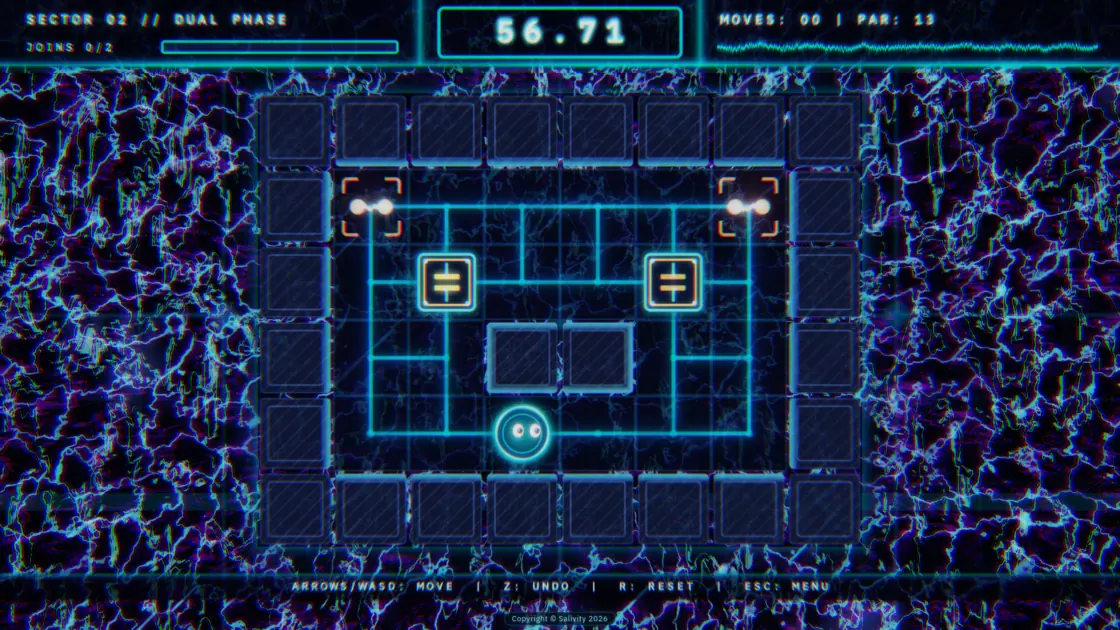
Originally created by Hiroyuki Imabayashi in 1981, Sokoban established a deceptively simple blueprint: push crates onto designated storage tiles without getting them stuck against walls or corners. Because you can only push and never pull, every single move requires careful foresight. Before diving into complex twists on the genre, players who want to experience or revisit the pure fundamentals can jump straight into a browser-based Sokoban Clone to sharpen their spatial thinking. Once you have mastered the basics, a wide ecosystem of indie and retro puzzle games takes that core mechanic in wildly creative directions.
Baba Is You
Baba Is You is widely considered one of the most inventive block pushing games ever made. Instead of only moving crates around a warehouse, you push word blocks that form active rules governing the level itself. Phrases like "WALL IS STOP" or "ROCK IS PUSH" sit directly on the grid, and breaking or rearranging those sentences changes how the game behaves in real time. Turning yourself into a wall, making water walkable, or transforming a locked door into the win condition requires thinking far outside traditional puzzle habits.
Patrick's Parabox
Patrick's Parabox introduces recursion to the classic Sokoban formula. In this minimalist puzzle game, you push boxes into other boxes, and you can also enter those boxes to find entirely new puzzle rooms inside them. Some stages even allow you to push a box into itself, creating mind-bending spatial loops. Despite how dizzying the concept sounds, the game introduces each rule gently and delivers tight, memorable "aha" moments without relying on trial and error.
Stephen's Sausage Roll
Stephen's Sausage Roll looks deceptively goofy on the surface, yet puzzle enthusiasts frequently rank it among the hardest and purest Sokoban-style games ever designed. You control a character carrying a fork who must roll sausages onto grill tiles so that both sides cook evenly without burning. Because your fork occupies a separate tile and blocks movement in certain directions, simply turning around becomes part of the puzzle. Every single island level is handcrafted with zero filler.
A Monster's Expedition
For players who prefer a calmer atmosphere, A Monster's Expedition replaces cramped warehouse corridors with a sunlit archipelago. You play as a friendly monster knocking down trees and rolling logs into the water to build makeshift bridges between islands. The movement rules feel instantly familiar to Sokoban fans, while the open-world structure lets you wander away from a tough puzzle and return later with fresh eyes.
Bonfire Peaks
Bonfire Peaks adds a third dimension to block pushing by letting you pick up, carry, and stack wooden crates across voxel landscapes. Your goal is to bring a box of personal belongings to a bonfire at the end of each stage. Turning while holding a crate requires clear space around your character, turning narrow ledges and multi-tiered platforms into clever spatial riddles. Its melancholic soundtrack and atmospheric visuals also give it a distinct mood rarely seen in grid puzzles.
Adventures of Lolo
Long before the modern indie puzzle boom, the Adventures of Lolo series on the NES blended Sokoban-style block pushing with action-puzzle hazards. Players push emerald blocks not only to clear paths, but also to shield themselves from enemies, build bridges over water, and trap hazards in place. It remains a great entry point for anyone interested in how early console games expanded the grid-based puzzle format.
Why Block Pushing Puzzles Endure
What keeps games like Sokoban relevant more than four decades after the original release is the elegance of their constraints. A small grid, a handful of objects, and strict movement rules leave nowhere to hide sloppy design. When a solution finally emerges from a room that looked completely impossible five minutes earlier, the reward comes purely from your own reasoning. Whether you stick with traditional crate pushing or experiment with recursive worlds and changeable rules, the subgenre continues to prove that simple mechanics can produce remarkably deep puzzles.